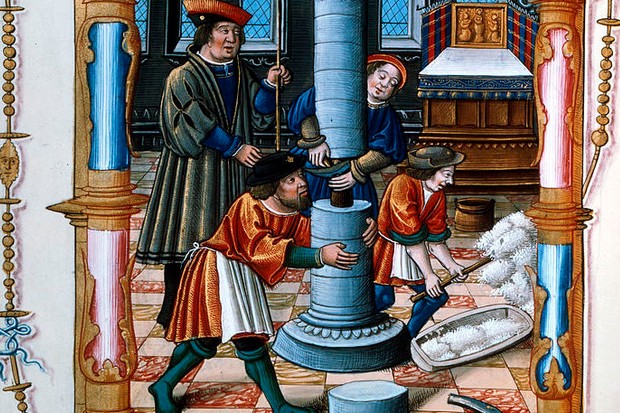
LE PRÉCURSEURS: Les Statuts de Ratisbonne (1459)

Les Statuts de l’association des tailleurs de pierre et maçons (extraits)

Ratisbonne

Au nom de Dieu le Père, du Fils, du Saint-Esprit et de sainte Marie, mère de Dieu, de ses bienheureux saints serviteurs, les Quatre Saints Couronnés d’étemelle mémoire, nous considérons que pour conserver amitié, union et obéissance, fondement de tout bien, de toute utilité et bienfait de tous, princes, comtes, seigneurs,localités et couvents, réalisant actuellement et dans le futur, églises, bâtiments de pierre ou constructions, nous devons former une communauté fraternelle ; cela pour le bien et l’utilité de tous les maîtres  et compagnons du métier des tailleurs de pierre et des maçons en terre allemande, surtout pour éviter toute discussion, échec, soucì, dépenses et dommages provenant de désordres et de transgressions à la bonne règle.

Nous nous engageons pour opérer tous les règlements pacifiquement et à l’amiable. Pour que notre entreprise chrétienne soit valable en tout temps, nous, maîtres  et compagnons de ce dit métier, originaires de Spíre, Strasbourg et Ratisbonne, en notre nom et au nom de tous les autres maîtres et compagnons du dit métier ci-dessus mentionné, nous avons rénové et clarifié les vieilles traditions et  nous nous sommes constitutes dans un esprit freternel en un groupement et nous sommes  engagés à observer fidèlement les règlements ci-dessous définis et cela pour nous-mêmes et pour nos successeurs. Continue reading LE PRÉCURSEURS: Les Statuts de Ratisbonne (1459)

History of the Grand Lodge of Antioquia – First Part

HOW THE DEPT. OF ANTIOQUIA FeLL UNDER THE JURISDICTION OF THE GRAND LODGE OF THE REPUBLIC OF COLOMBIA, BOGOTA’

The Grand Lodge  of the Republic of Colombia  was established in Bogotá on 19 February 1922.  Eleven years later its Grand Master Tulio Rubiano signed a document that attested that the Grand Lodge  of the Republic of Colombia  had jurisdiction  over the Departments of Cundinamarca, Cauca, Huila, Narino and the local administrations of Meta & Vaupes, Putumayo and the Caqueta Police Station.

This proves that the Dept. of Antioquia was not controlled by the Grand Lodge  of the Republic of Colombia, based in Bogotá.  So how did it later fall under that jurisdiction ?

Everything points to  the political  divisions at the end of 1929 within the Liberal Party between Enrique Olaya, the candidate  running for the Presidency of Colombia and the chairman of the Party Alfonso Lopez.  Such disagreements also influenced the breaches  that appeared within the  Grand Lodge of the Rep. of Colombia, based in Bogotá in 1932, 10 years after  its creation.

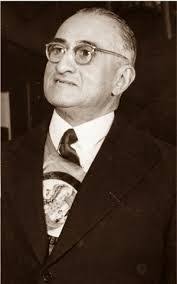
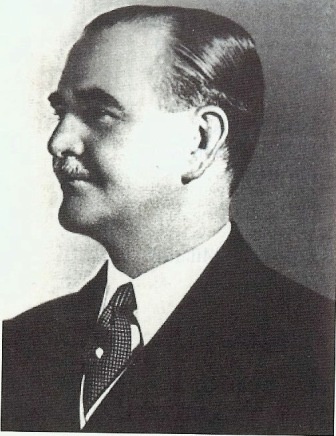
Dario Echandia
Dario Echandia

Continue reading History of the Grand Lodge of Antioquia – First Part

BREAKING A MASONIC OATH

In Freemasonry the individual who presents himself at the door of a Masonic Lodge “properly prepared and humbly soliciting to be admitted  to the mysteries and privileges of Ancient Freemasonry” is called the “Initiate”.  What leads him there, is an act of faith. He comes because in life he has a feeling of incompleteness and because he finds that pursuing ephemeral pleasures does not satisfies his soul.

Every Initiate in every Mystery must pledge secrecy for what will be communicated to him during the ceremony.  Such constraint has been imposed on him since time immemorial and evidence exists that this was customary also in the days of the Guilds and of the operative medieval stone masons.

The solemn promise of the modern Initiate, however, is not on a par with the oath of the ancient craftsmen.

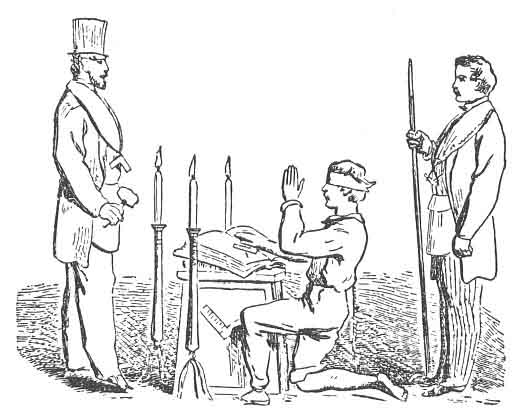
06400According to Bernard Jones [1]  “the oath is a solemn appeal to God in support of the truth of a declaration made and in witness that a promise will be kept”; note the words “an appeal to God”. An oath is also neither objectionable nor can it be open to criticism, unless the oath itself is immoral. What an Initiate swears on the Volume of the Sacred Law  nowadays is instead an Obligation, which is described as a binding agreement made under pain of a  sanction  if  it is unilaterally broken. Essentially, ritual revisions through time have eroded and eventually removed  the  authority and  intensity initially present in the oath and turned it into a mere promise. For that reason it is felt necessary to give the obligation a mantle of solemnity by asking the Initiate to recite the ritual words in a manner similar to giving testimony in a Court of Law and seal his promise by kissing the VSL.

Both oaths and obligations bind society together and stop it from falling into disorder, confusion, anarchy ; they also insure  that justice keeps being administered. All authority custodians, legislators, civil servants and State officials are bound by their oath of office and so too are the politicians, even though the latter regularly commit perjury with a despairing indifference.  The Romans punished this sin by tearing the sinner’s tongue out by the roots.

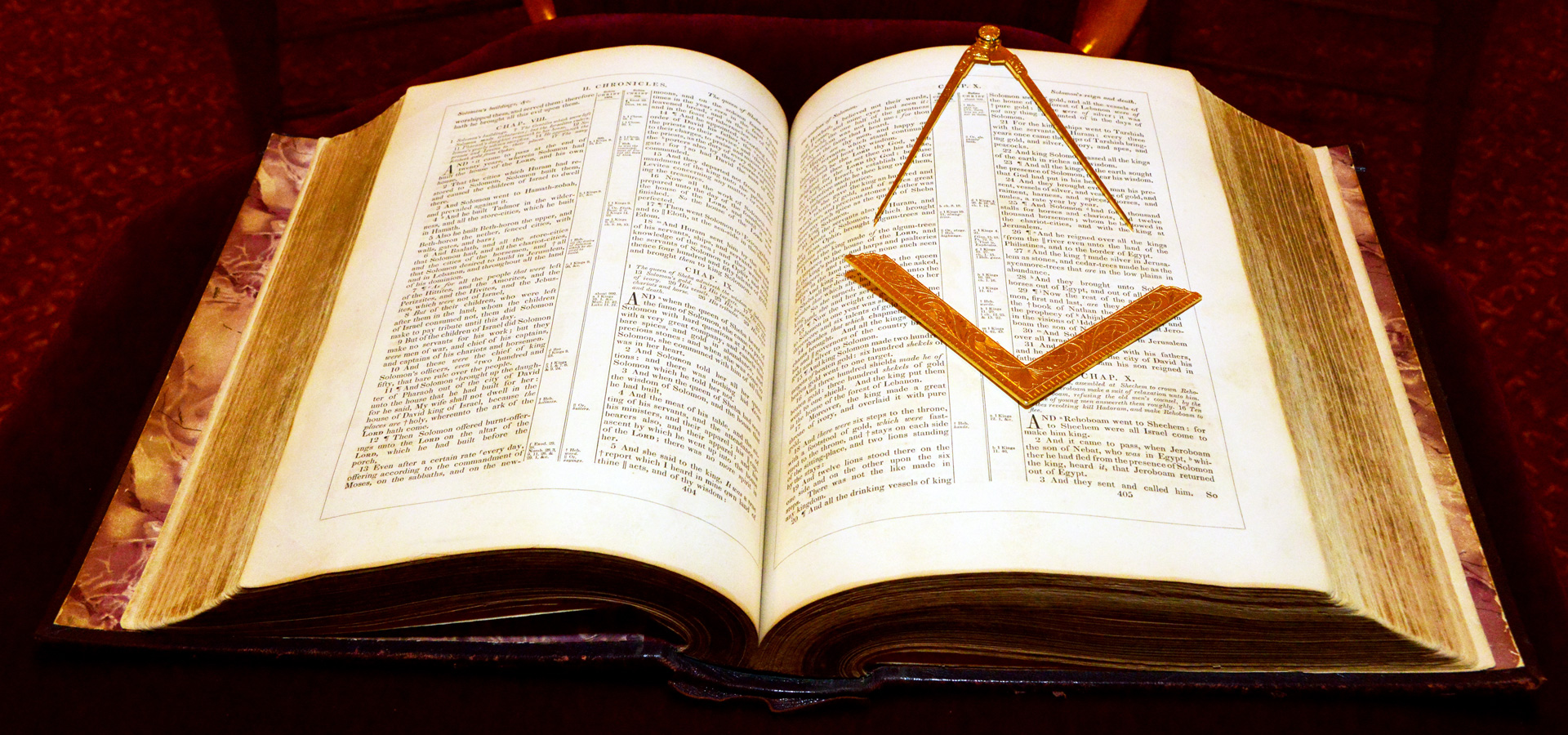
The Masonic Square and Compass on the Bible

Continue reading BREAKING A MASONIC OATH

THE DUTIES OF A FREEMASON – I DOVERI DEL FRATELLO MASSONE

Click here if you want to read the paper in Italian.

More and more thoughtful Brethren have a serious dissatisfaction with the state of the Craft in (X).  At the core of their concerns is the heartfelt lament that Masonry in (X) has effectively degenerated into a social and dining club, meeting upon  the excuse of initiating yet another candidate into a society whose only apparent purpose is to carry out initiations , whilst seeking to justify its existence through the business of institutional charity. 

Freemasonry  hierarchy (in X) classically maintains discipline through the assiduous manufacture of 'honours' whilst ignorantly sacrificing ancient form and spiritual value in deferential respect to transparent political correctness.

(...) THIS -  whatever it is and however socially valuable it may be in some respects - IS NOT Freemasonry.

(The Lodge has become) an initiation sausage-machine (but) if Freemasonry means anything,  it means the making of the whole man, from rough to ashlar to polished stone. It indicates a psychological and spiritual journey through an esoteric interpretation of our rich symbology.  English Freemasons who wish to pursue such studies in a working setting, have for far too long been effectively deprived.

(*)

Some of you may think that these are harsh words. But although the statement was issued around 2012, it still reflect the current situation in some part of  Freemasonry.

What follows are the duties (**) that must be adhered to by anyone who wants to become a Freemason. They relate to the behaviour in society, in the family and in the Lodge.

The spiritual aspects of the Art are also mentioned for your instruction.

The personal duties of the Freemason
Continue reading THE DUTIES OF A FREEMASON – I DOVERI DEL FRATELLO MASSONE

I doveri del Fratello Massone

Clicca qui per la versione Inglese dell’articolo

Sono sempre di piu’ i Fratelli che si sentono  seriamente insoddisfatti dello stato della Massoneria in Inghilterra.

Al centro delle loro preoccupazioni  c’e’ il sincero lamento che la Massoneria in Inghilterra e’ in effetti degenerata  in a una societa’ di svago e ristorazione, che si riunisce  con la scusa di iniziare un altro candidato in una societa’ il cui apparente scopo e’ quello di portare avanti le iniziazioni, giustificando  allo stesso tempo la propria esistenza attraverso le attivita’ caritatevoli. La gerarchia della Massoneria in Inghilterra mantiene  la disciplina attraverso l’assidua fabbricazione di onoreficienze, sacrificando per ignoranza  l’antica Arte ed i suoi valori spirituali,  in deferenza verso una  politica di trasparenza.

La Loggia e' diventata una macchina per la iniziazione di nuovi candidati.   (…) Ma quantunque  socialmente valido tutto quanto detto possa  ,sotto certi aspetti, dimostrare d’essere … non e’Massoneria !

Il compito della Massoneria e’ quello di trasformare l’uomo attraverso un un viaggio psicologico e spirituale  ed una interpretazione esoterica della nostra ricca simbologia, cosi’ come si trasforma una pietra rozza in una pietra perfettamente levigata.

Aime’, i Massoni Inglesi che desiderano seguire tali studi,continuano a  venirne a lungo privati.

Parole dure, e’ vero, ma che furono fatte intorno all’ anno 2012 e che tuttavia ancor’oggi riflettono la situazione in buona parte della Massoneria.

Quanto segue,  sono  i doveri  che devono venire osservati da chiunque voglia divenire un Fratello Massone. Essi riguardano il comportamento nella societa’, nella famiglia e nella Loggia.  Gli aspetti spirituali  dell’Arte sono altresi’ menzionati.

Doveri personali del Massone

Il fratello Massone deve saper usare le proprie virtu', evitando qualsiasi forma di intemperanza e di eccessi che gli impedirebbero l'adempimento dei lodevoli doveri dell'Arte. Egli deve essere diligente nella sua professione e fedele al Maestro che serve. Nelle ore di ozio egli si dedica allo studio delle arti e delle scienze affinche' sia meglio preparato ai suoi doveri verso Dio, la Patria, il prossimo e se stesso.  Egli deve, per quanto e' possibile, acquistare uno spirito di pazienza, mansuetudine, sacrificio ed abnegazione per saper dominare  se stesso e guidare la propria famiglia con affetto, dignita' e prudenza. Egli deve saper reprimere ogni disposizione nociva ai suoi simili  cercando di promuovere fra essi quell'amore e quella cooperazione che sentono  i membri di una stessa famiglia. Egli deve possedere una  buona reputazione, deve imparare ad obbedire  a coloro che gli sono al di sopra per quanto possano sembrargli inferiori per rango e condizioni sociali; poiche' pur non avendo la Massoneria  privato nessuno dei suoi titoli e dei suoi onori, nelle logge, l'eccellenza delle virtu' e la conoscenza dell'Arte diventano una vera sorgente di nobilta', di comando, di governo.
Doveri civili del Massone

Il Massone e'cittadino pacifico; egli non deve mai prendere parte a complotti e cospirazioni contro la pace e il benessere della Patria, ne' deve agire indoverosamente verso le Autorita'. Egli deve coltivare la concordia e vivere in armonia ed amore fraterno.
Doveri sociali del Massone

I Massoni debbono essere uomini morali: buoni mariti, buoni figli e buoni vicini. Debbono evitare qualsiasi eccesso che possa recare danno a loro stessi ed alle loro famiglie; debbono saggiamente condurre gli affari che concernono le loro famiglie e le loro Logge, per i motivi che essi ben conoscono.
Doveri fraterni del Massone

I Liberi Muratori hanno sempre avuto l'obbligo di rifuggire dal calunniare un vero e leale fratello, dal nutrire sentimenti ingiusti e maligni, dal criticare un fratello od i suoi atti. Non devono mai permettere che si divulghino ingiusti biasimi e calunnie contro un fratello assente, ne' permettere che l'occupazione o i beni, nonche' il carattere di costui siano danneggiati, ma essi dovranno difenderlo, renderlo edotto di quasiasi pericolo o danno lo minacci ed aiutarlo a sfuggirgli, per quanto lo permetteranno l'onore, la prudenza e la salvezza della religione, della moralita' e dello Stato; ma non debbono andare oltre.
Aspetto spirituale della Massoneria

La Massoneria e' un centro d'unione  atta a conseguire una sincera amicizia fra gli uomini che, al di fuori di essa, sarebbero restati costantemente separati gli uni dagli altri. Essa rappresenta la sintesi di tutte quelle verita' indicate e perseguite dagli illuminati di tutti i tempi. Sono stati i sapienti di tutte le epoche che ad essa hanno portato il contributo del loro sapere(...).  Infatti, la Massoneria mentre dichiara di conoscere, quale base dei propri lavori, un principio superiore ed ideale, lo designa con la denominazione di Grande Architetto dell'Universo e non raccomanda ne' combatte alcuna convinzione religiosa ne' pone limiti di sorta con affermazioni dogmatiche e lascia la piu' completa liberta' nelle investigazioni del Vero.   Il mezzo per procedere a queste investigazioni e' lo stesso che ha permesso ai Saggi delle varie epoche di raggiungere risultati grandiosi: la ragione.
Le Virtu' massoniche

Citando le parole di Goblet d'Alviella: "Le virtu' massoniche consistono nella solidarieta', nella tolleranza,nell'uguaglianza". 
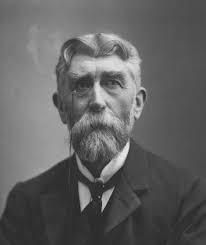
Eugene Comte Goblet d'AlviellaLa solidarieta' massonica comprende: soccorsi ai fratelli infelici e pratica generale della filantropia; contribuzione in Logge all'istruzione e all'accettazione dei Fratelli (scambio delle conoscenze acquisite, conferenze, discussioni civili ed artistiche). Concorso individuale prestato nel mondo profano nei limiti della giustizia e senza pregiudizio dell'indipendenza di ciascuno nell'apprezzamento dei suoi doveri e degli interessi propri.  La tolleranza e' accettare ed incoraggiare anche l'espressione di opinioni che non si condividono affatto; procacciare cio' che unisce a preferenza di cio' che divide. Rispettare la liberta' di ogni membro in materia filosofica, politica e religiosa, non criticare affatto gli atti della sua vita privata, fin tanto che questi atti non intacchino l'onore. L'uguaglianza prescrive di dimenticare in Loggia le distinzioni profane e proibisce di prendere partito, in Loggia, fra le opinioni dei suoi membri. (...)La Massoneria si sforza percio' di emancipare gli spiriti e di eliminare ogni distinzione di credenza, di razza, di nazionalita', fortuna, discendenza e posizione sociale. Il raggiungimento della perfezione massonica e' conseguito solo dopo una integrale trasformazione spirituale che comporta l'abbandono della personalita' individuale.
Il segreto massonico ovvero la riservatezza

La riservatezza deve essere mantenuta poiche' essa permette la riuscita dei compiti prefissi.  La disciplina della riservatezza e' necessaria perche' ,in quanto Massone, l'iniziato non si appartiene piu'.  Riservati devono restare pure i particolari Riti praticati nei Templi, di cui al difuori non si deve assolutamente parlare poiche' potrebbero essere commentati stupidamente; ed e' doveroso evitare che "le perle siano gettate ai porci". Viviamo in un mondo di persone poco benevoli nei nostri confronti e pronte ad avvalersi della minima indiscrezione per attaccarci, travisandone le finalita'.  La Massoneria non e' una setta segreta, ma bensi' una fratellanza che detiene un segreto, quello cioe' di pervenire razionalmente, e percio' solidamente, al perfezionamento del singolo e per esso alla collettivita'.  Il suo sistema razionale, sorretto dal un'etica  non soltanto teorica ma effettivamente praticata, la fa apparire alla Chiesa cattolica quale una temibile rivale, che era piu' spicciativo colpire con le armi.  In un'onesta Religione e , quando sussista, in un'onesta Chiesa la Massoneria non puo' che esser vista come un'alleata; naturalmente non puo' accettare i dogmi che il raziocinio rifiuta, perche' essa intende pervenire  alla conoscenza per processo logico  e naturale, per processo interiore di maturazione che esclude imitazione pedissequa, affettazione et similia.  Si tratta, come si vede, del piu' nobile attributo commessoci dal Grande Artefice, ovvero quello di pensare e di migliorarci, altro che far cosa temibile.  D'altra parte la Massoneria e' fiorente in tutti i Paesi veramente liberi e quel governo che dimostrasse di considerare la Massoneria temibile, dimostrerebbe delle due l'una: o di aver bisogno di sottrarsi al giudizio delle libere ed oneste coscienze, oppure di essere asservito alla sola Chiesa che per ragioni di opportunita' intende mantenersi oscurantista.  Convinti del trasformarsi continuo di tutte le cose, della loro natura infinita ed eterna, riflessa nei fenomeni del Cosmo materiale e morale, noi aborriamo qualunque dottrinarismo nel quale un orizzonte di verita' ,compresa od intravveduta, diventi un limite prefissato e quindi, un ostacolo alle nuove intuizioni del pensiero.

Spero che tutto quanto detto vi faccia riflettere e meditare e che io sia riuscito a infondere l’amore per l’Arte.


Articolo del Maestro Venerabile della R. L. Risorgimento all'Oriente di Taormina, Obbedienza del SOMI (Sovrano Ordine Massonico Italiano) - Pubblicato in: Serenamente , No. 99 del 5 Luglio 2010.

(*) Il testo appare sul sito dell'Ordine degli Antichi e Accettati Massoni  sotto la giurisdizione della "Gran Loggia Regolare d'Inghilterra".  Ho condotto delle leggere modifiche ma il messaggio rimane chiaro ed e' tale che credo molti Fratelli Massoni condividono ma non appoggiano apertamente. 
(**) Citazioni prese dallo Statuto della Serenissima Gran Loggia del Sud – Massoneria Universale di R.S.A.A. – Discendenza Piazza del Gesù, e dalle antiche Tradizioni.

 

Freemasonry is a search for Light – by Albert Pike

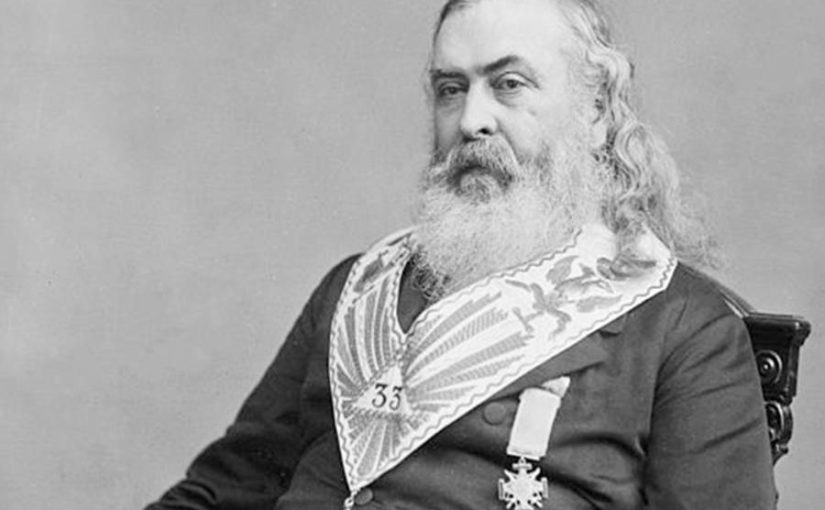
Albert Pike[1] was an eminent American Freemason who practiced Law [2] before  joining the Confederation Army during the  American Civil War and reaching the grade of General.  As a Freemason, he was extremely active in developing rituals of the Scottish Rite and in 1859 he reached the 33° grade in the Southern American Jurisdiction. Pike held the office of Grand Commander of the Order until 1891, the year of his death.

Supreme Council
Supreme Council of the Scottish Rite

To these days he is , in some respects, still seen as a controversial  figure  for unproven accusations of having also belonged to a world famous far right American secret society.  Irrespective of whether it may be  true that  he was part of such a cult,  the power of Pike’s skillful analytical mind  is unquestionable and it is the reason behind my decision to print the following extract from his work “Morals and Dogma”[3].  His words ring true then as well as today, 150 years on.   Judge for yourself. Continue reading Freemasonry is a search for Light – by Albert Pike

The Masonic litigation of the Countess Barkóczy

I have learned about this unusual story of a XIX century woman Freemason, from an essay written by the Hungarian researcher and author László Vári.  I believe it is a captivating account that deserves to be divulged by Tetraktys.  The story  is also available in Italian in my own blog, whereas the full original version is available here with the title: The Curious Case of Helene Hadik Barkóczy with the Freemasons”

***

The Barkóczys of Szala were the wealthiest landowners in Hungary. According to the law of the Land ,which dated back to the Middle Ages , the family’s property would pass on to its collateral branch in the absence of a male heir. Helene Hadik-Barkóczy , as the sole offspring of Count Janos Barkóczy, risked losing her estate. To preserve it within the family, her father János first established the primogeniture in favour of his daughter and later contrived to go through a legal process, established by royal grace, of “masculinisation” that in effect changed Helen’s juridical status to that of a boy.

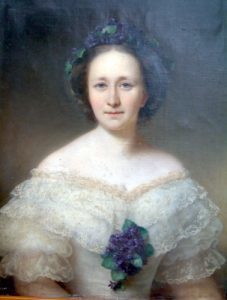
Countess Helene Hadik-Barkoczy

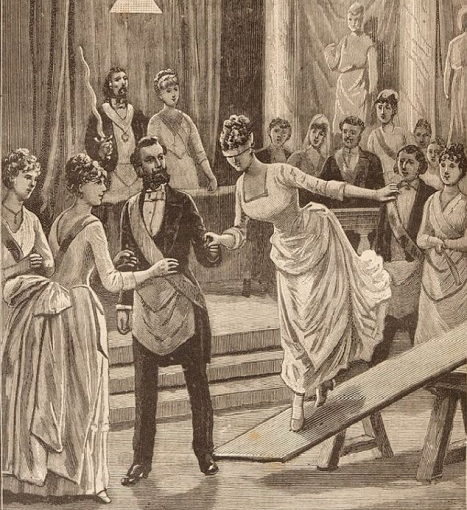
Countess Helene was exceptionally intelligent.  She founded the Hungarian Historical Society; she had a strong interest in the arts and sciences and knew various foreign and classic languages, including Latin. Through her marriage to the Earl Béla Hadik – assistant general to Archduke Maximilian, future Emperor of Mexico – Helen had seven offspring. Her interest in Freemasonry came from both her grandfather and uncle ‘s precedent in Freemasonry and from the inherited family’s Masonic  library. So deep was her enthusiasm for the Craft that she desired to join. Membership was denied to women, but her richness and her “masculinization” were elements that Helene believed would tip the balance in her favour.

Ferenc Pulszky
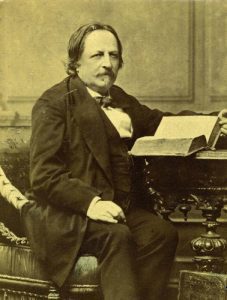
Ferenc Pulszky

Continue reading The Masonic litigation of the Countess Barkóczy

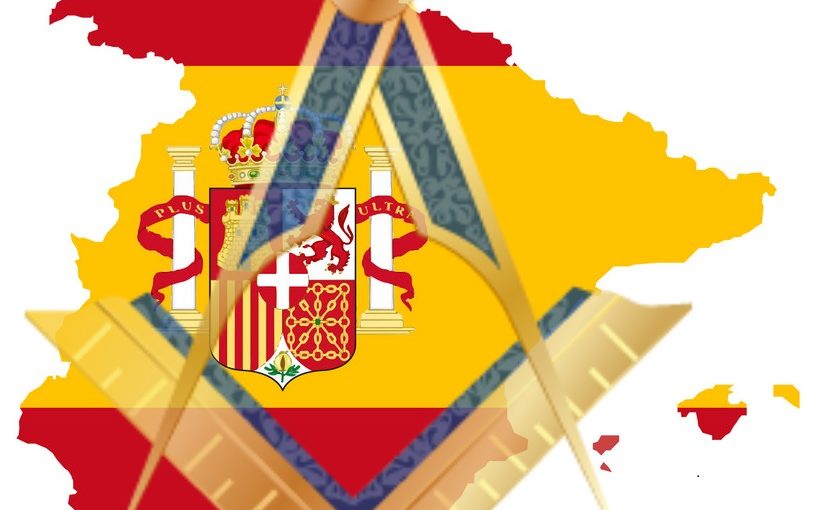
LA MASONERIA EN ESPAÑA

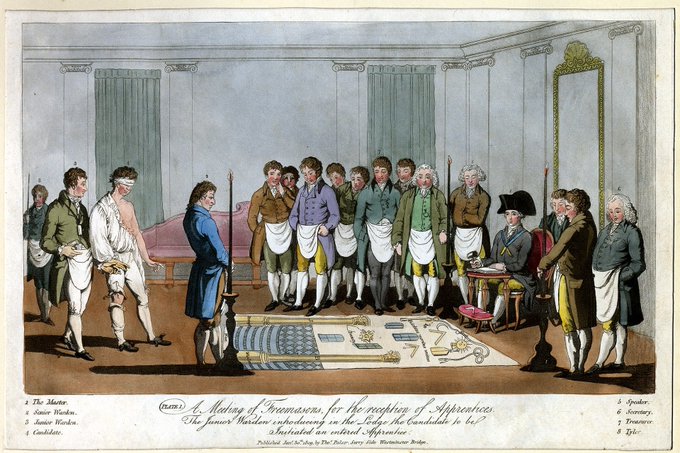
El afán por darle a la masonería un pasado glorioso, considerando que cuanto más atrásen el tiempo se encuentre su origen mayor prestigio y validez tendrá, ha hecho que las teorías sobre su origen sean muy diversas, tanto es así que hay quien afirmaba que los masóns descendían de Salomón[1] o de los Templarios; otros asocian la francmasonería al propio Jesucristo, incluso a Adán, sería Enoch quien realizaría una recopilación sobre las diferentes conjeturas acerca de los origines de la masonería. El primero en considerar que los origines de la masonería no son tan lejanos sino que se remontan a los constructores fue el abate Grandiddier en su obra Ensayo historíco y topográfico de la Iglesia catedral de Estrasburgo.Con el paso del tiempo la idea de los constructores ha ido cogiendo fuerza y actualmente pocos son, fuera del ámbito de la masonería, los que dudan de que el origen real de la masonería se remonta al medievo, concretamente al oficio de los constructores quienes se reuníran en la logia,término que designa tanto al lugar como a las personas que se reunían en dicho lugar para trabajar en la construccíon de edificios religiosos. Todos los que estaban en una misa logia estaban bajo el mando del maestro.  La jerarqujzación dentro de una logia era, de manera simplificada y de mayor a menor rango: maestro, compañeros y aprendices y los ritos de iniciación de los neófitos así como de aquellos que cambiaban de estamento , eran muy solemnes y la mayoría de ellos han  pervivido hasta la actualidad. No debemos confundir este rito de iniciación con los Ritos, con mayúscula ; estos últimos hacen referencia a una Continue reading LA MASONERIA EN ESPAÑA

The Mason Lodge – by Wolfgang Goethe

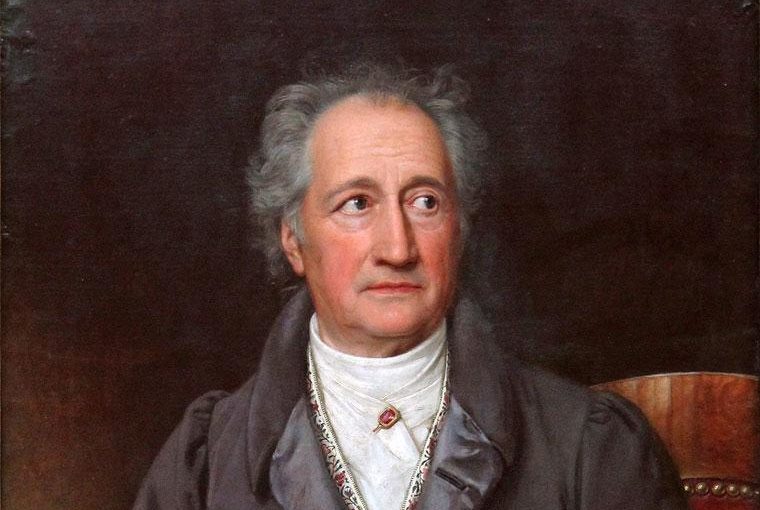
Our Brother Johann Wolfgang Goethe was born in Frankfurt-on-Maine, Germany, on August 29, 1749. He joined Amalia Lodge in March of 1780.  Goethe is considered to be the greatest of German poets.  Here is his beautiful poem about the Mason‘s immortality, his journey through life and his freedom to choose a good life.

The Mason’s ways are

A type of Existance
And his persistance

Is as the days are
Of men in this world.

The future hides in it

Gladness and sorrow,
We press still thorow,

Naught that abides in it
Daunting us-onward.

And solemn before us

Veiled, the dark Portal,
Goal of all mortal;

Stars silent o’er us,
Graves under us silent.

While earnest thou gazest
Comes boding of terror,
Comes phantasm and error

Perplexes the bravest
With doubt and misgiving.

But heard are the Voices-
Heard are the Sages,
The Worlds and the Ages;

“Choose well; your choice is
“Brief and yet endless;

“Here eyes do regard you
“In Eternity’s stillness;
“Here is all fullness,

“Ye have, to reward you.
“Work, and dispair not.”

Rotary and Lions: two quasi masonic societies

Aside from Freemasonry and the Fraternal Orders like The Odd Fellows, there are Masonic-like societies all over the world that promote philanthropic causes. The Lions Club and The Rotary Club are two of the most well-known service organizations. Both were established in Chicago, Illinois, U.S.A. in the early 1900s and developed in Europe twenty years later. The Lions Club was founded in 1917 by Melvin Jones[1]; the Rotary in 1905 by a group of business managers. They were Gustav Loehr, a mining engineer, the coal shopkeeper S. Schiele, the tailor H. Shorey and Paul Percival Harrys, a lawyer. The group met in rotation in each other’s office or shop, hence the name Rotary.

The first Rotary Club in Italy was set up on 20th November 1923 at the Restaurant COVA in Milan, a city that would become the Nation’s economic capital. The founder, however, was not an Italian but Sir James Henderson, an HendersonEnglishman and fascist sympathizer who was living in Italy at the time. In 1932, Henderson became the Managing Director of Coats [2] in 1932 and was regularly seen to dine with dictator Benito Mussolini [3]; we also know that Henderson had many business deals with the fascist party during the Duce’s reign of terror[4].
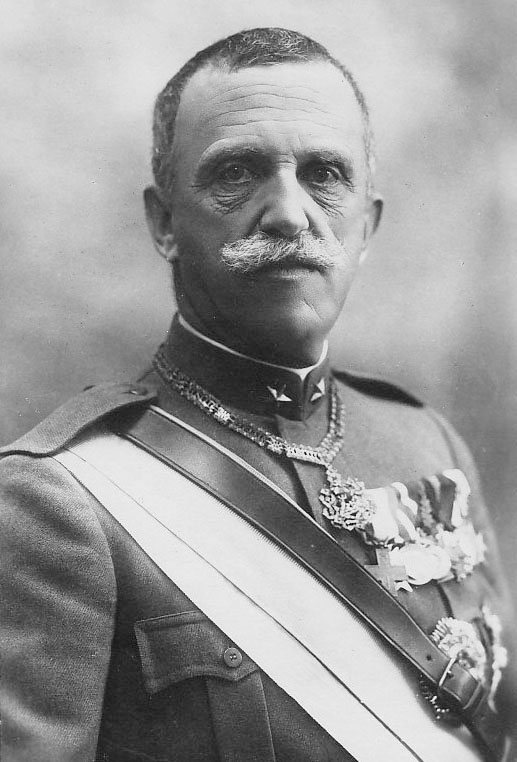
The Italian Rotary was an elitist and aristocratic organization that included prominent Italian businesspeople such as Motta, Pirelli and Borletti. After Milan, the Rotary Club expanded to Genoa, the Piedmont region, and then throughout the Italian peninsular. By then, the list of notable members had grown to include Giovanni Agnelli, Marzotto, Giovanni Treccani, Guglielmo Marconi and King, Vittorio Emanuele III, who Kingof Italia Vittorio Emanuele IIIserved as an Honorary Member.

However, there is no need to retort to a nearly century-old controversy in order to show that a symbiosis between the Rotary, Lions and Freemasons existed in Italy. Suffice to say that it was none other than Giordano Gamberini [11], a former Grand Master of the Grand Orient of Italy [10] – who declared–on page 5 of the February 1981 issue of the Masonic periodical Hiram – that the two service Societies were Masonic Societies.

Indeed, the Lyons Club’s founder Melvin Jones was the Worshipful Master of Chicago’s Masonic Lodge “Garden City” N.141 of Chicago. Even He later became Lions’ General Secretary and Treasurer and the editor of the Club’s magazine. 

The first Lions’ logo of 1918 even displayed the capital letter L (similar to the square symbol) and the Compasses, which are both of Masonic origin and interpretation. The major difference between Rotary, the Lions Clubs and Freemasonry is the lack of esoteric teaching; otherwise, they essentially are “Masonry without the apron” [12]

The Rotarian Lodge N. 415, whose twenty-nine founders were also members of a Rotary Club in London, received the patent in 1920 from the United Grand Lodge of England. The Lodge has survived the test of time and now meets at Freemasons Hall in Great Queen Street.

But under the guise of philanthropy, the Lions, the Rotary Clubs and other Societies like The Fabian whose history I invited you to read, hide a clear elitist and sometime even sinister agenda. Vilfredo Pareto [16], an Italian sociologist and philosopher, has previously warned that “a community is always governed by an elite, even when it appears to have a democratic constitution”.

Continue reading Rotary and Lions: two quasi masonic societies